One endpoint: POST /api/v1/notify

Error reporting for AI agents

When a tool call fails or a run crashes, your agent sends one JSON request. BugBeacon groups repeats into one issue and tells the agent whether it is new.

Every agent failure, grouped into issues

Reports land in a list of issues, one per fingerprint. Open one to see the report your agent sent: the error, the frames, the last steps and the run's own metadata. See how grouping works

From report to issue in 3 steps

  1. One report from the agent

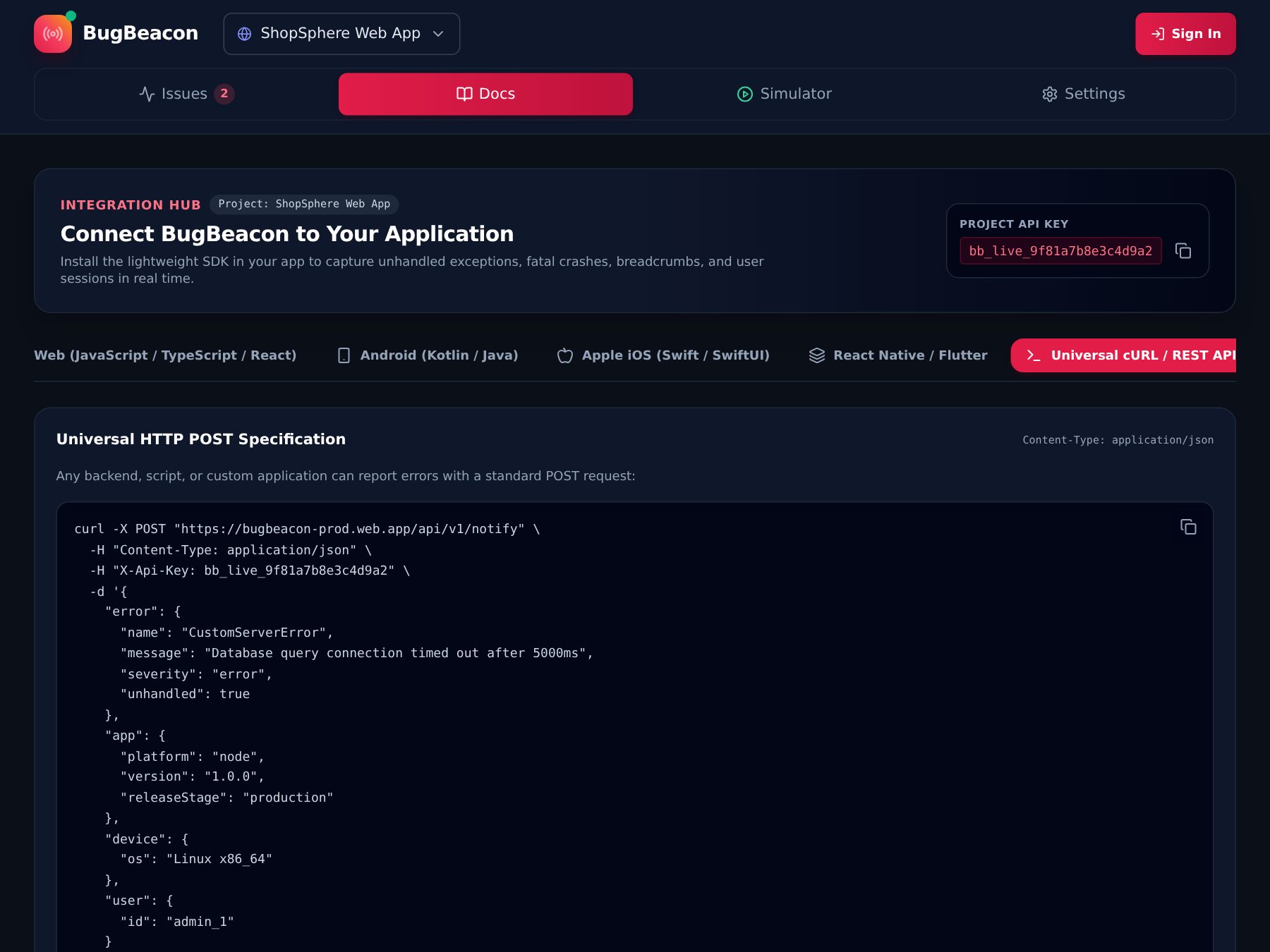
    A plain HTTP POST with the project key in the X-Api-Key header. No SDK: curl, fetch or requests will do, up to 2 MB a report.

    The BugBeacon docs tab showing the curl request that reports an error
  2. One fingerprint per issue

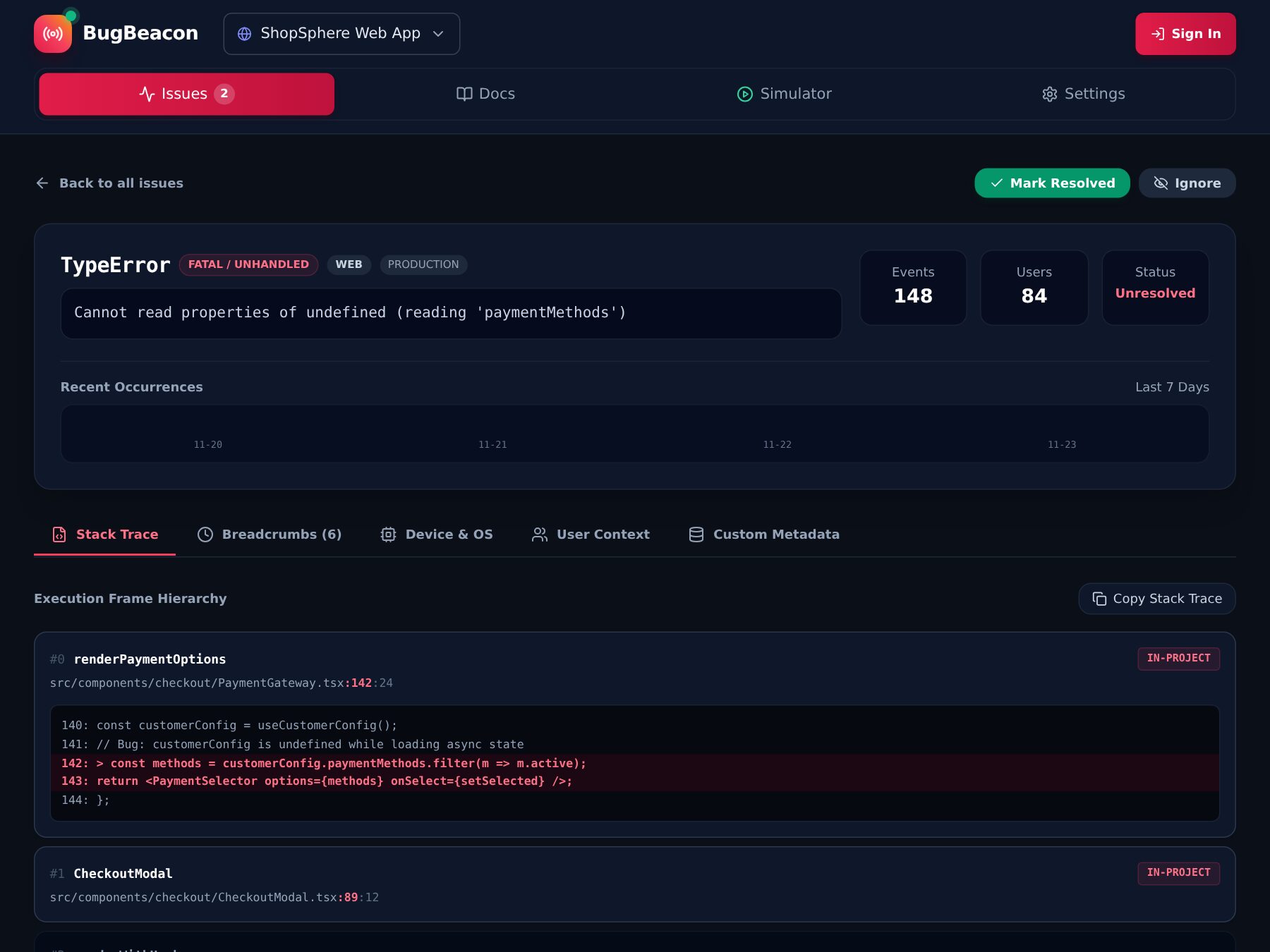
    The error name, the message with ids and addresses masked, and the top frame from your own code make one SHA-256 key. Same key, same issue.

    An issue page in BugBeacon with its event count, users and the stack trace
  3. The last steps on the issue

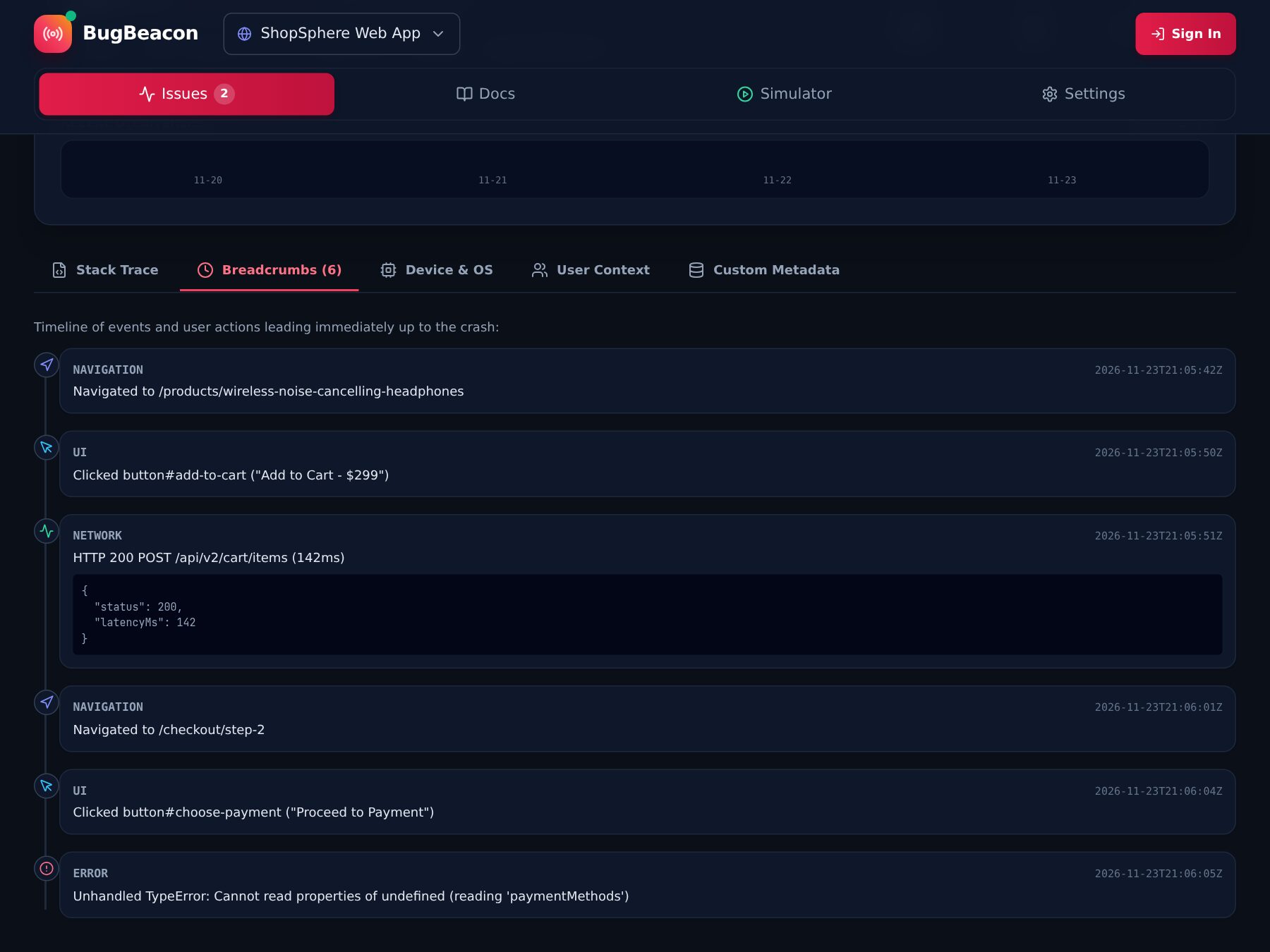
    Breadcrumbs, device, user and metadata from the latest report sit on the issue. Mark it resolved; a new report reopens it.

    The breadcrumbs tab listing the steps before an error

Made for unattended runs. Each report gets an answer the agent can use.

The isNewIssue answer

Every 202 answer carries issueId and isNewIssue, so a run can retry or escalate.

TSreport.ts202
const res = await fetch(url, req);
const out = await res.json();
// { issueId, isNewIssue }
if (out.isNewIssue)
  await askHuman(out.issueId);
else retryLater();
A new issue goes to a person.

Custom fingerprints per tool

Send your own fingerprint, such as the tool and failure kind, and those reports join one issue.

PYtools.py1 issue
report = {
  "error": {"name": kind(e),
            "message": str(e)},
  "fingerprint": "tool:" + name,
}
requests.post(url, json=report)
One issue per tool and failure kind.

Parsers for three stack formats

Send the raw trace as a string. V8, JVM and Apple symbol lines become frames.

TXTstacktrace3 formats
// V8: Node, browsers
at callTool (tools.ts:88:11)
// JVM: Kotlin, Java
at app.Run.step(Run.kt:42)
// Apple symbols
1 App 0x1000 -[Run step] + 42
Each line becomes a frame.

Reopened regressions

Resolve it after a fix. If the fingerprint arrives again, the issue reopens with the time it regressed.

{}issue.jsonregressed
{ "errorClass":
    "ToolTimeoutError",
  // was "resolved"
  "status": "unresolved",
  "regressedAt": "09:41Z",
  "eventsCount": 39,
  "usersCount": 4 }
Back to unresolved, with the time.

Questions

Before you point an agent at BugBeacon. More in the guides.

Do I need an SDK?

No. One POST with a JSON body is the whole protocol. There are SDKs for web, Android and iOS apps if you want automatic capture.

Can my agent read issues back?

Not yet. The API accepts reports and answers with the issue id and whether it is new. Issues are read in the dashboard.

What does it cost?

Nothing. Sign in with Google or an email link and create a project. You can also run your own copy on Firebase.

Who can see the reports?

Only the project's owner and members, after sign-in. Reports reach the database only through the ingest function, after it checks the key.

How does my agent learn the API?

Point it at llms.txt or the OpenAPI spec. Both describe the one endpoint and its fields.